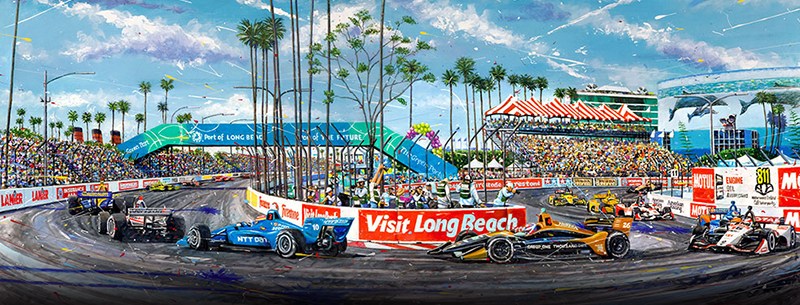
We’re heading to the West Coast to take on the street circuit used for the Grand Prix of Long Beach. The circuit originally played host to Formula 5000 in 1975. The race was a success, and garnered attention from Formula 1. Beginning in 1976, Long Beach became one of two Formula 1 races in the U.S. (along with Watkins Glen). In 1980, Long Beach became the sole Formula 1 stop in the U.S.
Despite great racing and large crowds, the Formula 1 Grand Prix of Long Beach was not financially successful for race promoter, Chris Pook. In 1984, Pook convinced city leaders to change the race sanction over to CART. The race became a high point on the CART calendar in short order, and it kick started a renaissance in the city of Long Beach.
The Grand Prix of Long Beach continued as a mainstay on the CART calendar until 2008, when CART and IRL reunited to form IndyCar. Since then, Long Beach has remained on the IndyCar calendar, and is recognized as one of the most successful motorsports events in the country.
But IndyCar isn’t the only sanctioning body that has raced at Long Beach. Other organizations include IMSA, Formula Atlantic, Indy Lights, Stadium Super Trucks, World Challenge, North American Touring Car Championship, Formula E, and others. And soon, it will play host to rounds 7 & 8 of the Forza Motorsports Hot Hatch Series.
Here’s a look at the track layout:

I’m making a change beginning with the Grand Prix of Long Beach races. I’m stepping up the Drivatar difficulty from “Expert to “Pro.” I have had finishes in previous races much better than I deserve based on how well I was driving. My hope is that the tougher competition will result in more realistic finishes.